A performing rights organization is a society that licenses songs for public performance, collects the fees and pays them to the songwriters and publishers who have joined it. For artists, it is the route to being paid when songs are played publicly.
This guide is part of the wider picture of how the music industry works, and it focuses on what these societies collect, who they pay and how a songwriter joins.
What a performing rights organization does
The right being licensed comes from copyright law. Global Music Rights explains in its licensing FAQ that the US Copyright Act grants owners of musical compositions certain exclusive rights, including the right to publicly perform their music. Radio stations, television networks, venues, shops and streaming services all need permission to perform songs, and negotiating separately with every writer would be unworkable for them and for the writers.
A performing rights organization (often shortened to PRO) solves that problem by licensing a whole catalogue in a single agreement. The same FAQ describes a blanket licence as authorising a business to publicly perform songs in the catalogue as often as it likes, without obtaining permission for each individual song. The organization then passes the money on. PRS for Music describes its job on its website as licensing music usage and collecting royalties globally for its members.
Two points are worth fixing early. First, a PRO deals with the composition, meaning the music and lyrics, rather than the recorded performance. Second, it pays only the people who have joined and registered their songs, so being a songwriter is not enough on its own.
How PROs collect and pay
Fees come from the music users a society licenses, and payments follow the usage it can track. ASCAP states that performances on stations paying the highest license fees earn more royalties than performances on stations paying lower fees, and that it can only pay for music that appears in its performance surveys. Plays are identified through a mix of broadcast monitoring, station logs and licensee reports, and the society decides which data sources it treats as authoritative.
Timing is slower than many new members expect. According to the same ASCAP help page, domestic royalties are usually distributed approximately 6-9 months after a performance when all the necessary data has arrived. Other societies run their own schedules, so a first payment can lag behind the first play by a long stretch.
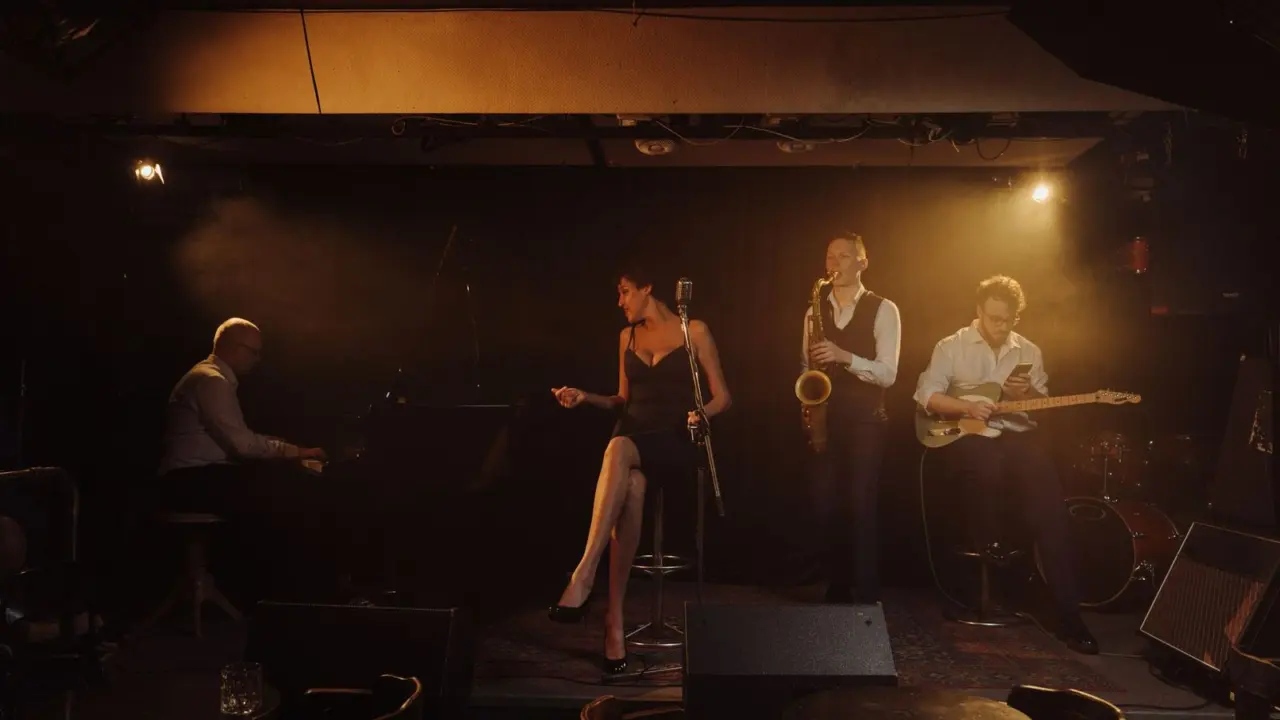
Live music is covered as well. ASCAP says its members can submit setlists to be paid for live shows at licensed venues through its OnStage program, and that it distributes royalties for songs performed on the top-grossing tours and festivals each quarter. For an act that plays small rooms, sending setlists is therefore part of the job.
Songwriters, publishers and the two shares
Performance royalties are generally split between the writer side and the publisher side. ASCAP notes that a publisher membership allows a member to collect the publisher share of a song’s performance royalties, and that a writer who has not assigned their publishing rights to someone else is also eligible for a publisher membership. An artist who writes and releases their own songs can therefore hold both roles.
Whether a publisher shares in the income depends on the contract. A songwriter who signs a publishing agreement usually hands over the right to collect the publisher share, which is why it pays to understand music publishing before agreeing to terms.
Bands need one extra step. ASCAP says each member of a group must complete a separate writer application and meet the eligibility criteria, so every co-writer is registered in their own right rather than through a single band account.
The main PROs and how they differ
In the United States, several organizations license public performance, and they differ mainly in how a creator becomes a member. Elsewhere, each country generally has its own society.
| Organization | Territory | How membership works |
|---|---|---|
| ASCAP | United States | Online application, free for new writer members |
| BMI | United States | Online application for songwriters and composers, and for US publishers |
| SESAC | United States | Invitation-only, approached through a representative |
| Global Music Rights | United States | Represents music creators in licensing their catalogues |
| SOCAN | Canada | Collects and distributes royalties in Canada and around the world |
These descriptions rest on the membership pages of ASCAP and BMI, with the SESAC, Global Music Rights and SOCAN details drawn from the sources linked in the paragraphs that follow.
The ASCAP and BMI routes are the most open. BMI invites songwriters and composers to join so that they get paid when their music is publicly played, and it publishes its standard writer agreement for applicants to read first. SESAC says it is an invitation-only company and that the best route in is for a lawyer, manager or agent to make contact on an artist’s behalf. Global Music Rights describes its role as representing music creators in the public performance licensing of their catalogues.
A US writer cannot spread songs across these societies freely. According to ASCAP’s membership FAQ, a writer can only belong to one society at a time for licensing public performances in the United States, while a publisher can be at multiple societies. Anyone moving between societies has to contact the current one for the information needed to switch.
Money earned abroad flows through links between societies. ASCAP reports reciprocal agreements with foreign performing rights organizations, under which the local society tracks performances, collects the fees and forwards the royalties. The international body CISAC describes itself as the world’s largest network in the creative sector, with 225 societies in 110 countries, and SOCAN says it collects and distributes royalties in Canada and around the world. An artist outside the US would normally join the society for their own country.
Joining and registering in practice
Joining is mostly paperwork, and the order matters. ASCAP says a writer can join once they have written or co-written music or lyrics for a work that is available to the public, whether on a streaming service, a CD sold at gigs or a video. Joining is free for new writer members, and a publisher-only application carries a $50 processing fee at the time of writing.
- Confirm which society fits the territory and the type of member, writer or publisher.
- Apply, and read the standard agreement before signing it.
- Register every song with accurate titles, writer names and splits.
- Add performer names for works that have already been played, and submit setlists for live shows where the society offers it.
- Keep contact and payment details current so statements and payments arrive.
Registration comes before payment. ASCAP’s payment FAQ calls registering music the most important step and says it can retroactively credit missed royalties only for a limited period, so late registration risks losing money. Delivering a track through digital music distribution puts a recording on streaming services, but it does not register the underlying composition with a society.
The detail varies by society and territory, and the best choice depends on the agreements an artist has already signed. This is general information rather than legal advice, and a qualified music-industry adviser can confirm what applies in a particular case.
Frequently asked questions
Can a songwriter belong to more than one PRO?
As a writer, a songwriter is limited to a single US society for public performance, although a publisher membership can sit at several. Anyone who wants to move should ask the current society what it needs to release the account, since the switch is arranged through that society.
Does it cost money to join a PRO?
It depends on the society and the type of membership. ASCAP says joining is free for new writer members, and other societies publish their own terms on their sites.
Do I need a PRO if I only play small shows?
A writer is eligible once a song is available to the public, and live play counts: members of ASCAP can submit setlists for licensed venues through the OnStage program. Whether the income justifies the effort depends on how often the songs are performed.
Does my distributor register my songs with a PRO?
Not as part of delivering music to streaming services. A distributor sends recordings to stores, while a songwriter registers compositions with a society directly, as the registration steps above explain.
Can I read the membership contract before applying?
BMI links to its standard writer agreement from its join page, so applicants can review it before they apply. Reading any agreement carefully, and asking an adviser about unclear terms, is sensible.